

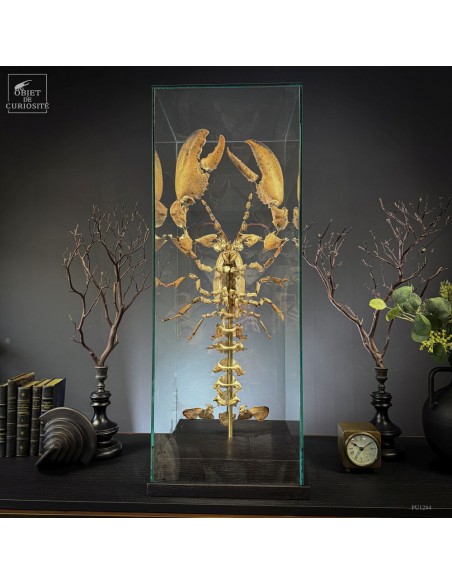
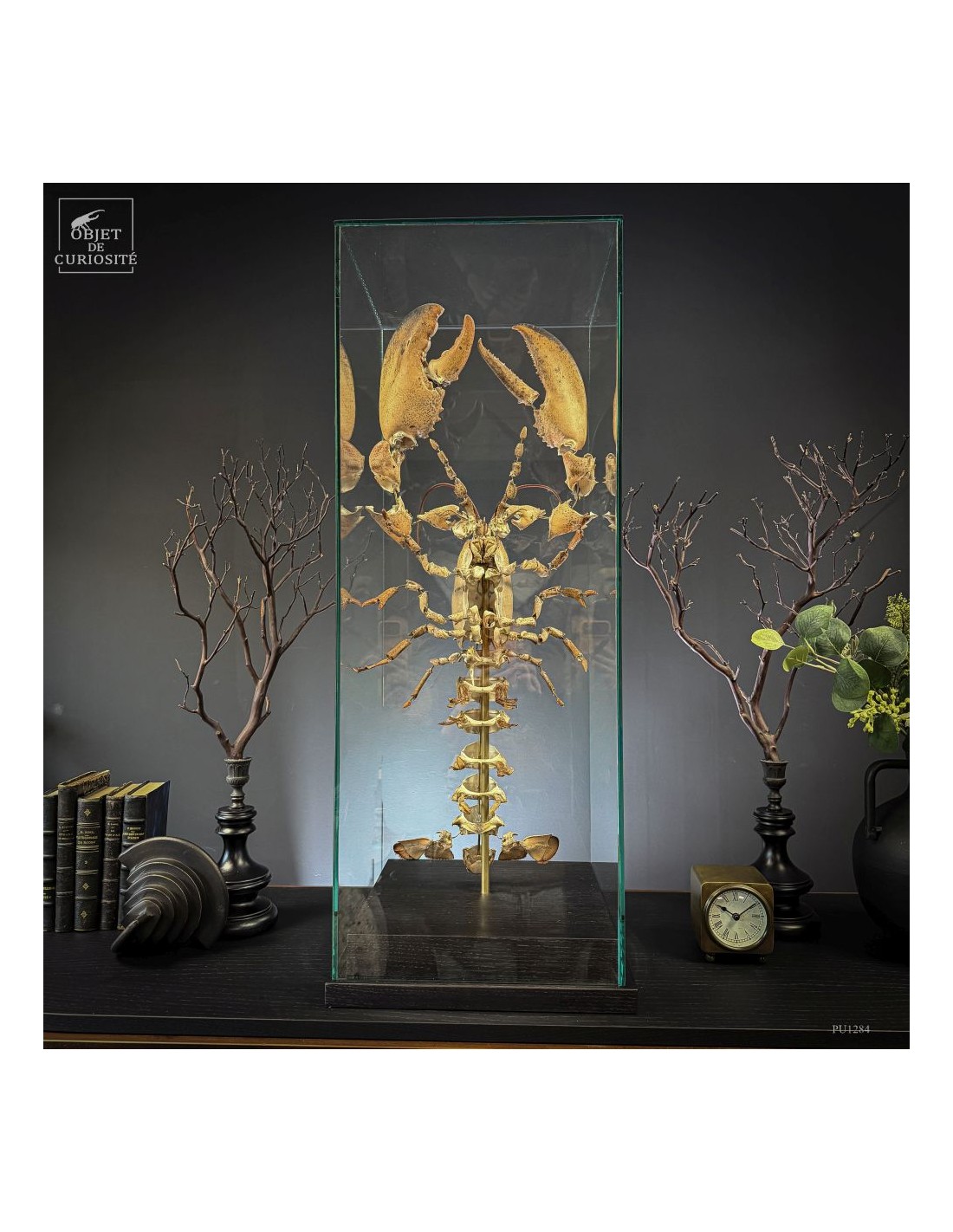
Exploded lobster HOMARUS GAMMARUS under square glass
PU1284
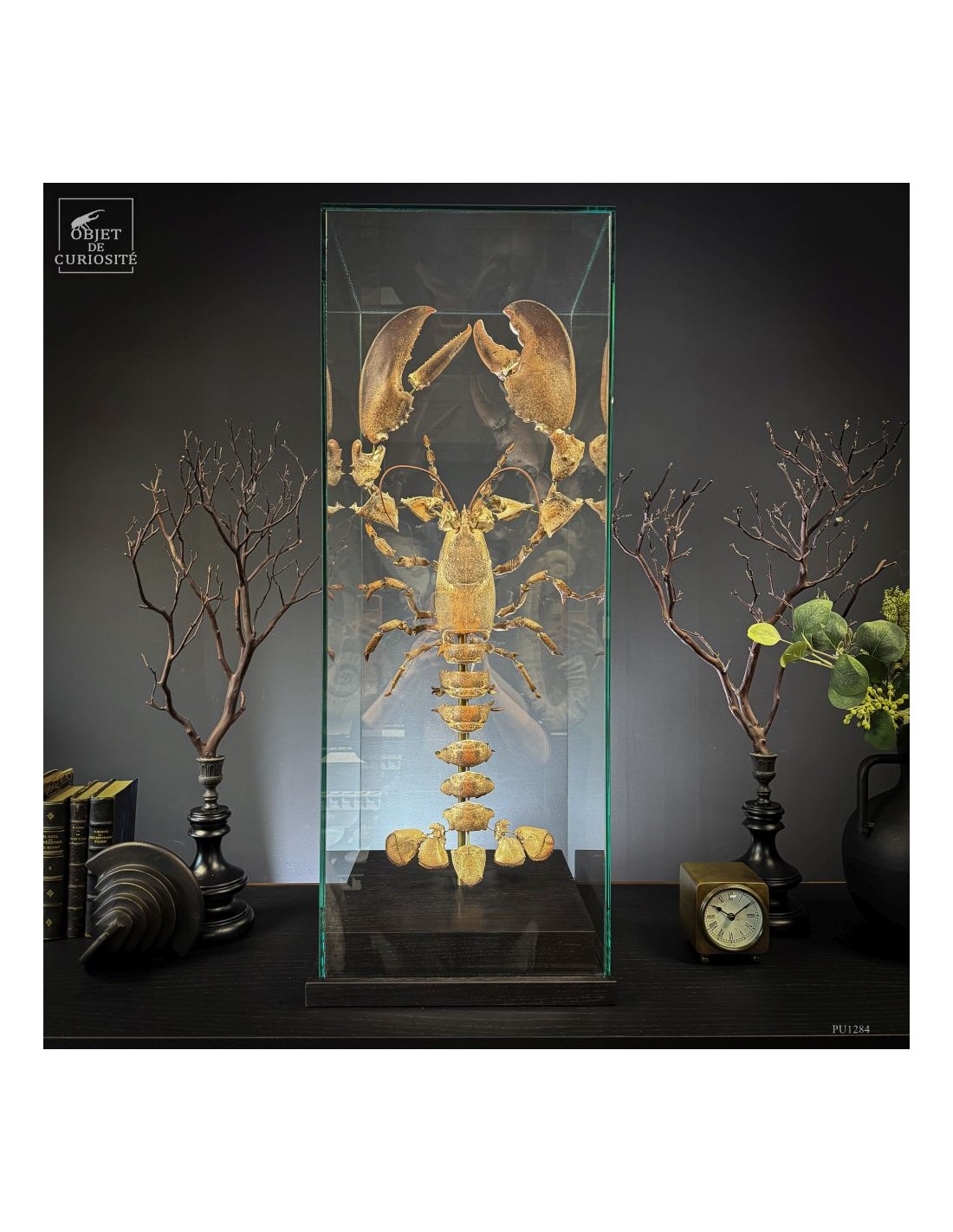
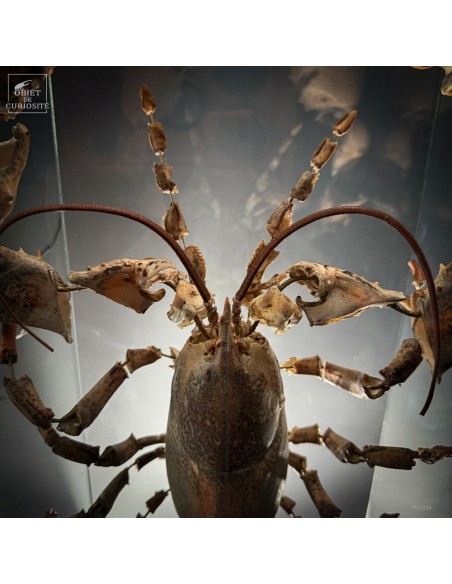
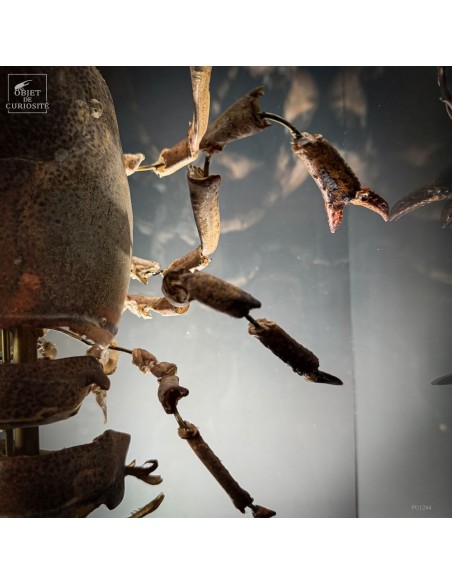
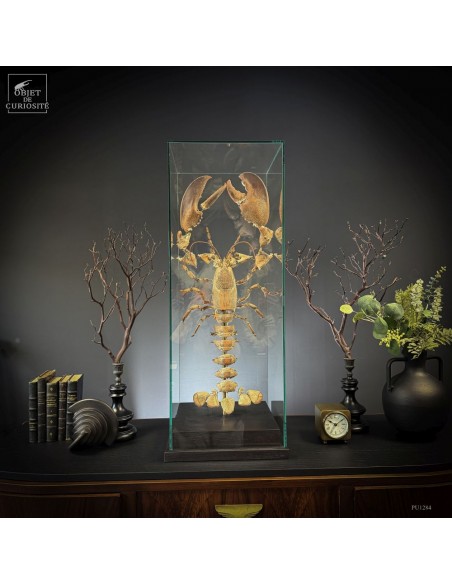
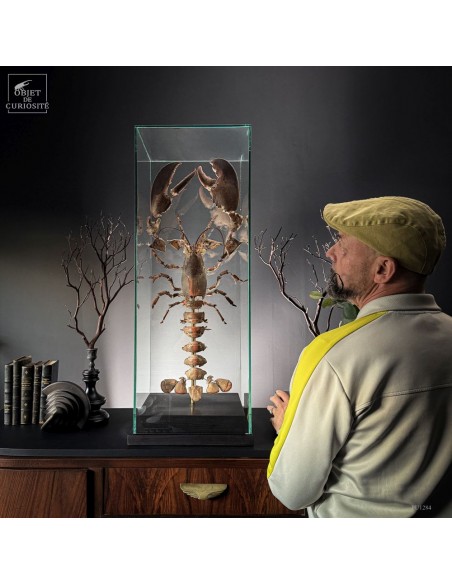
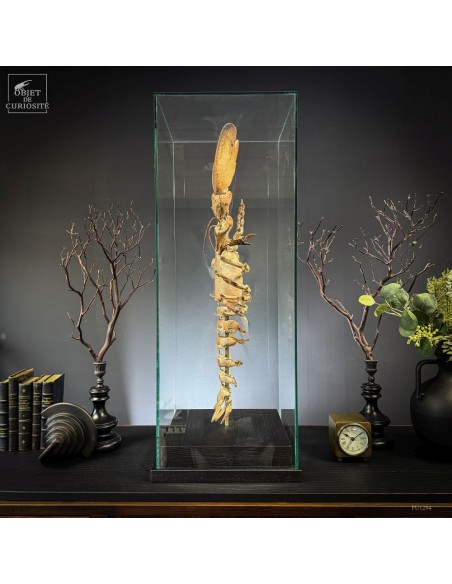
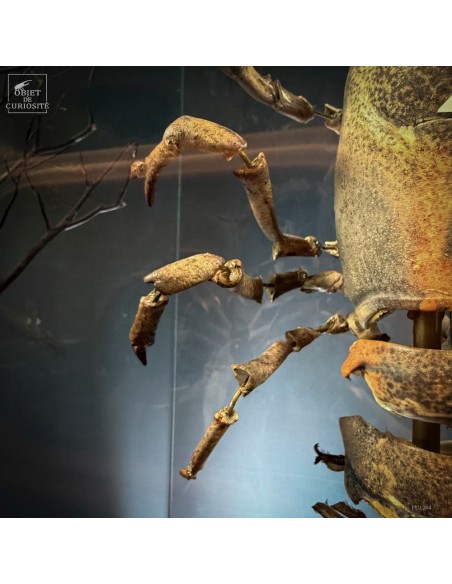
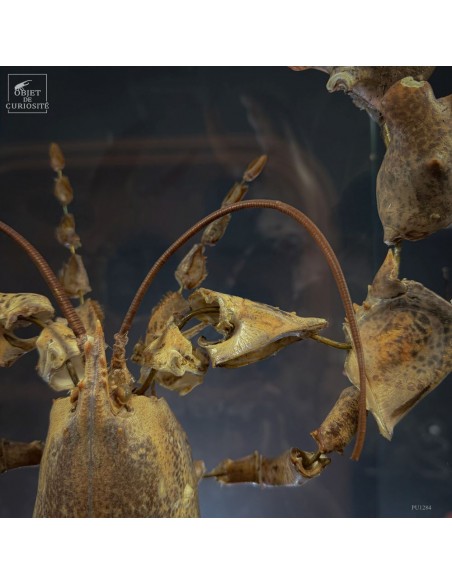
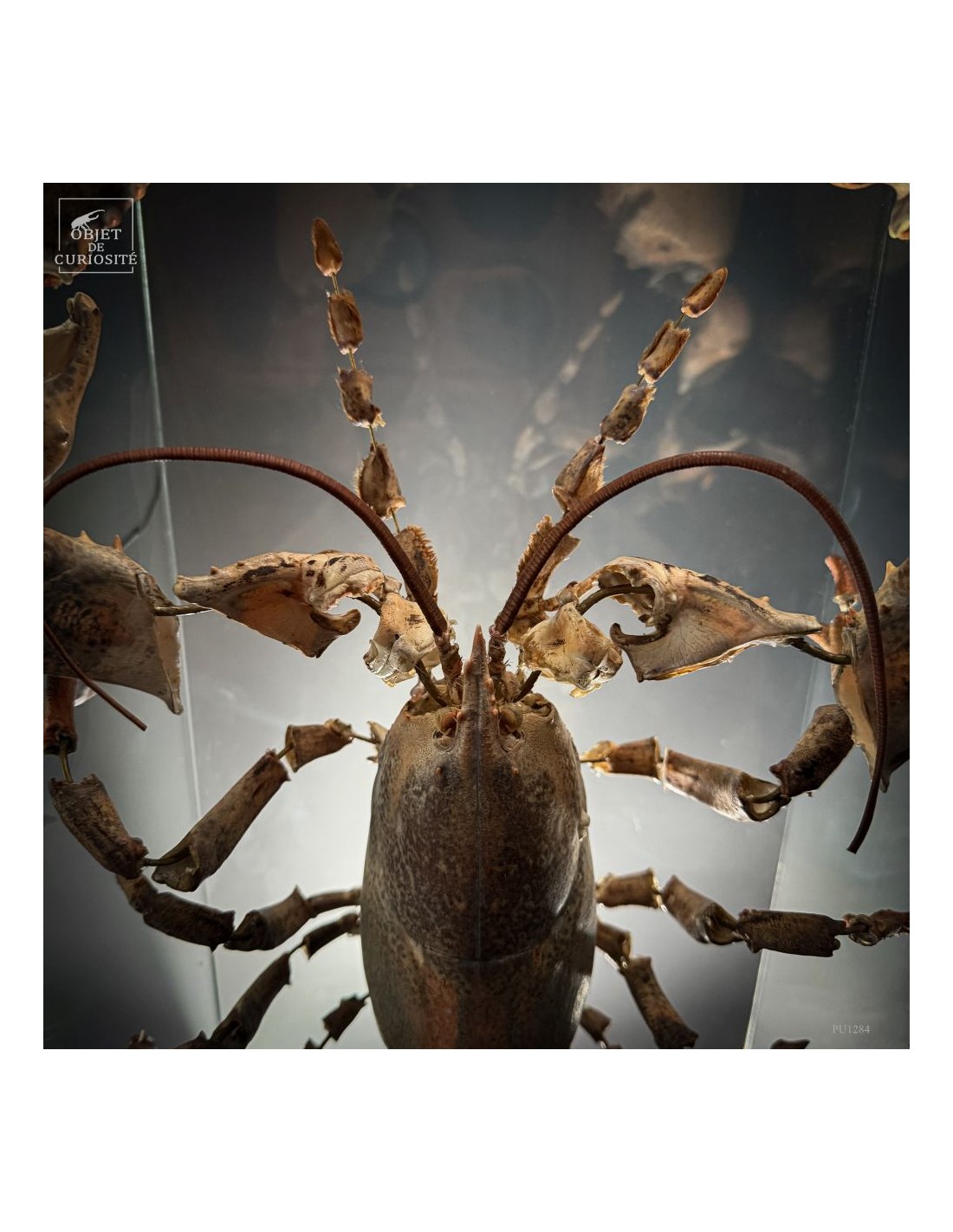
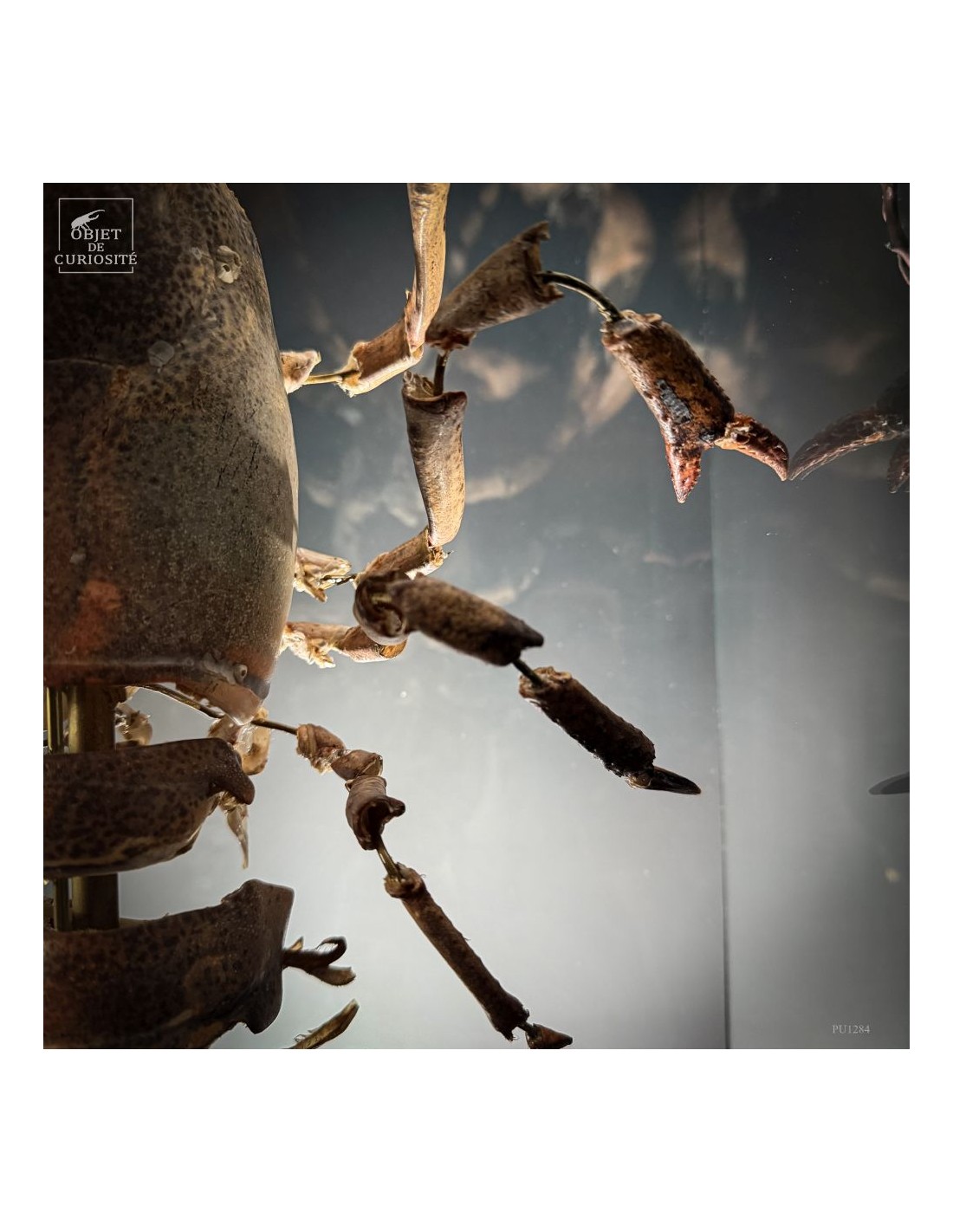
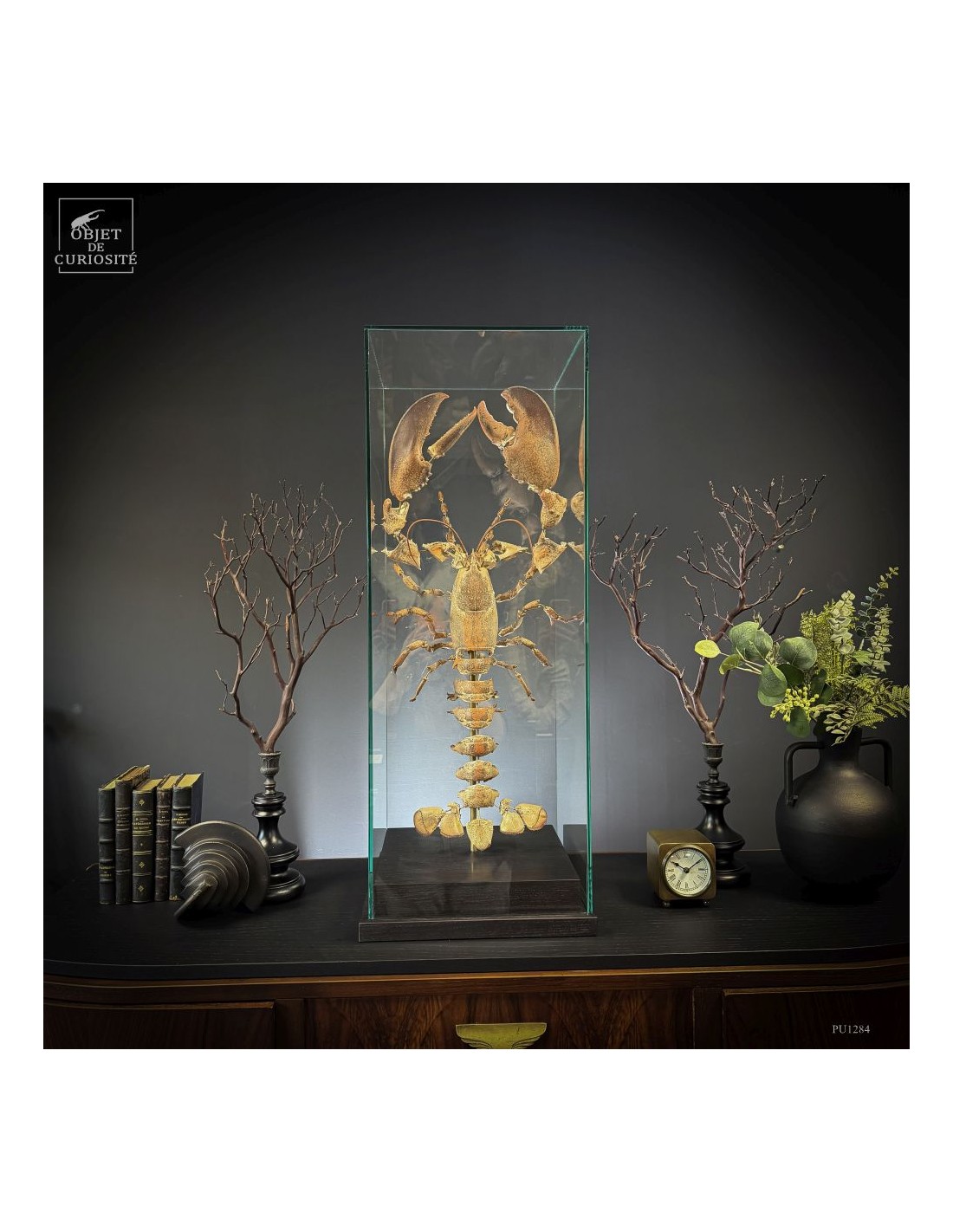
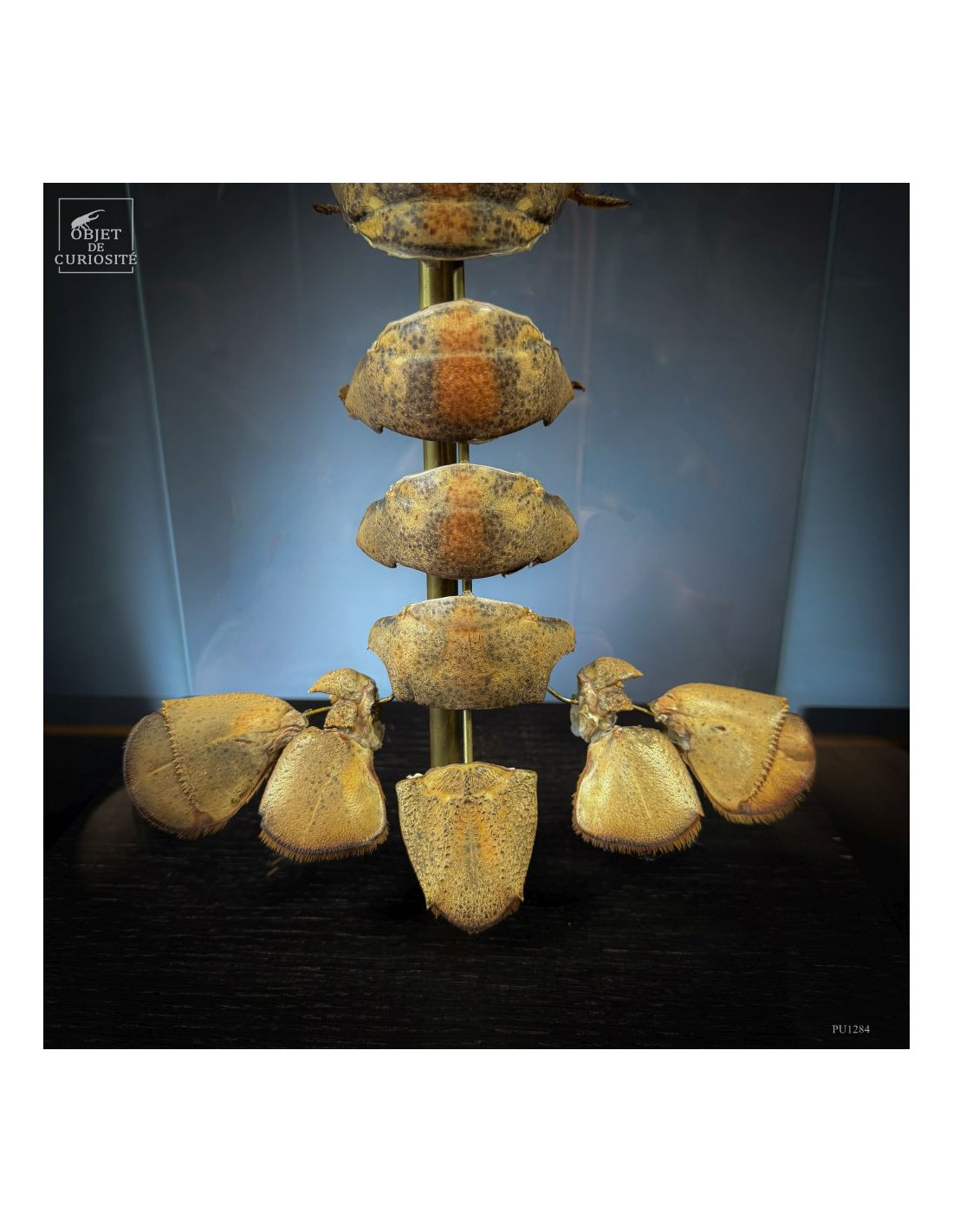
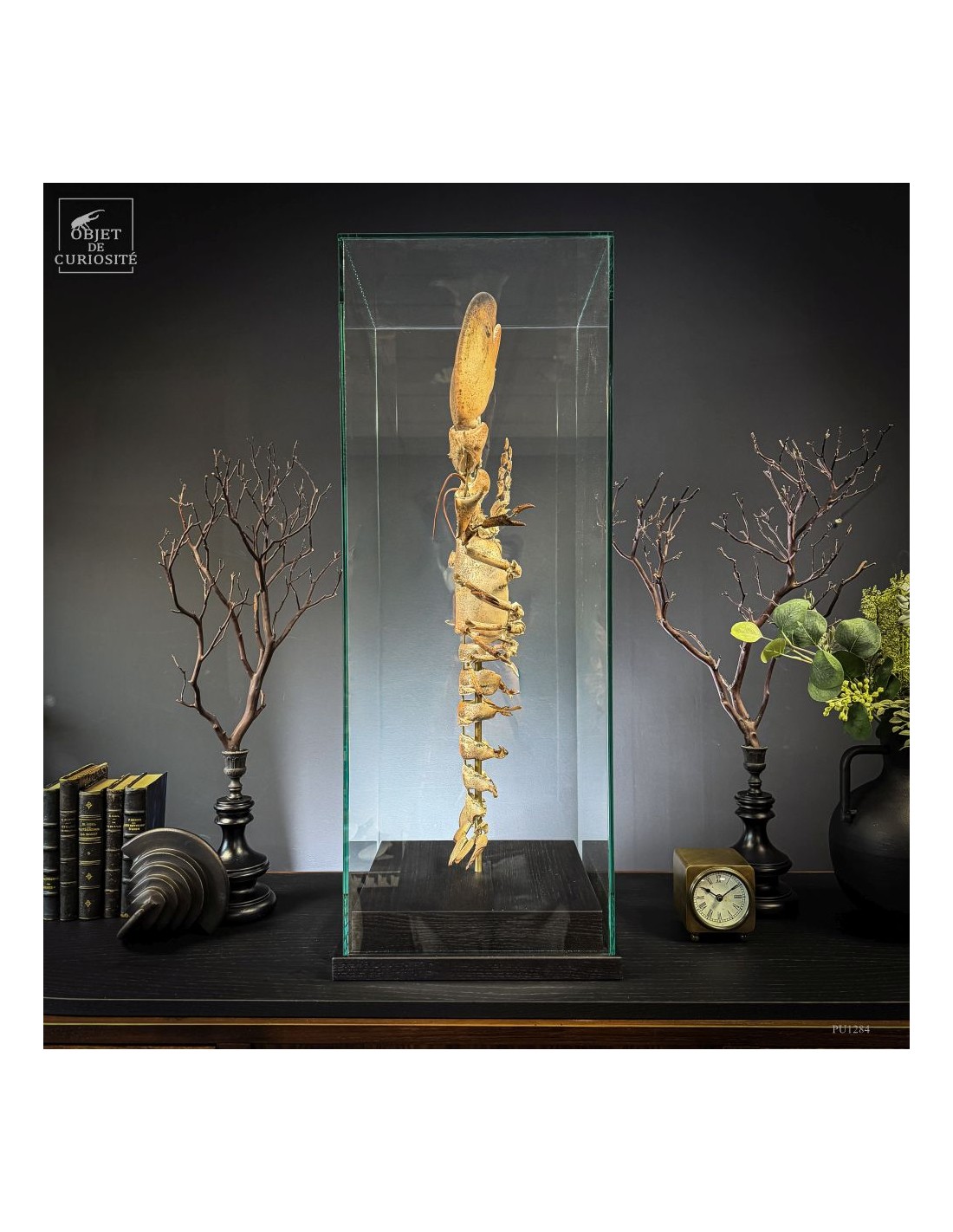
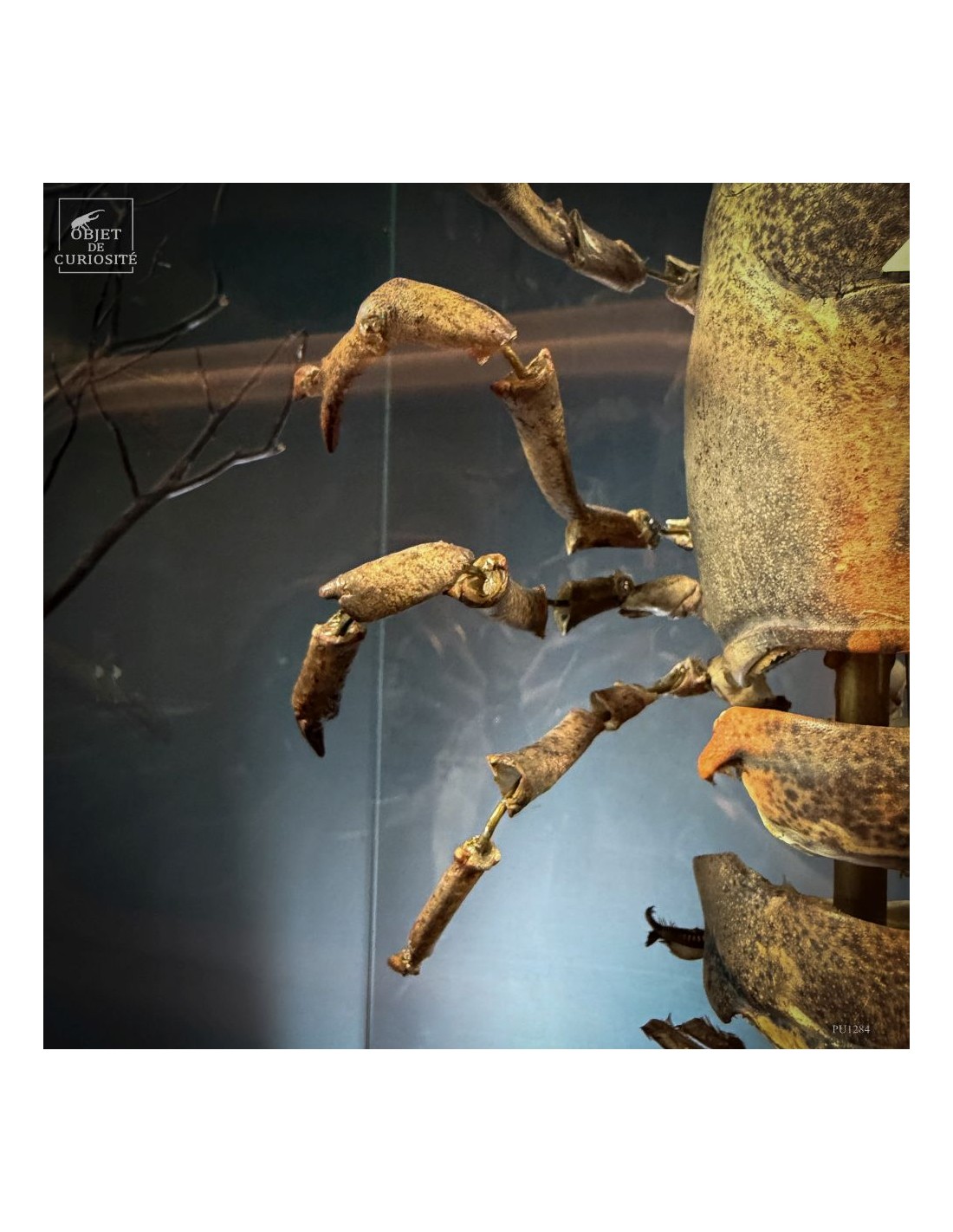
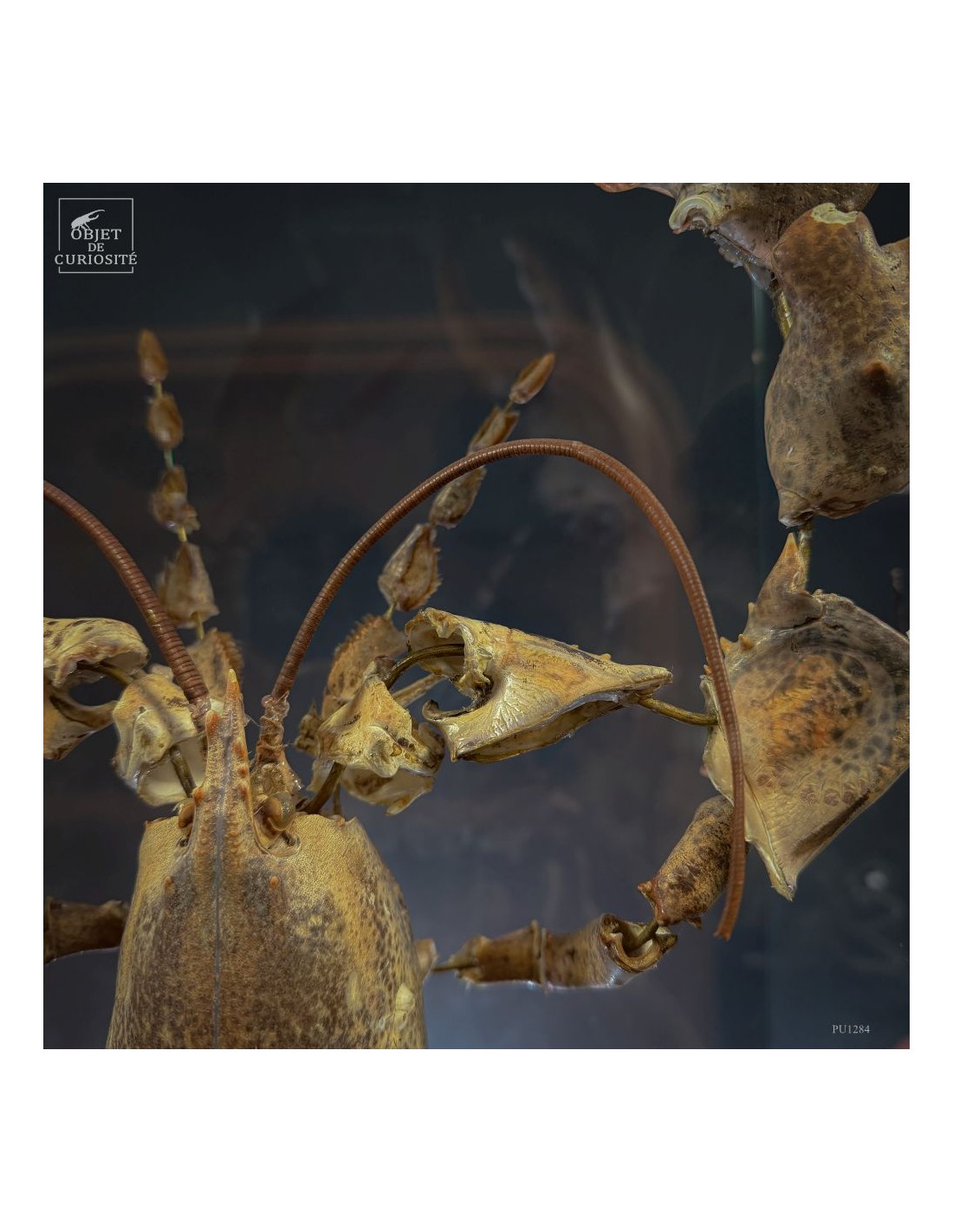
This specimen of HOMARUS GAMMARUS — the European lobster — has been mounted using the “exploded view” technique developed in the 19th century by Léon Jean Baptiste de Belloy de Beauchesne (1817–1859), a pioneer of comparative anatomy. Each part of the exoskeleton has been carefully detached, then spaced out using fine brass rods, revealing the internal articulation system of the animal.
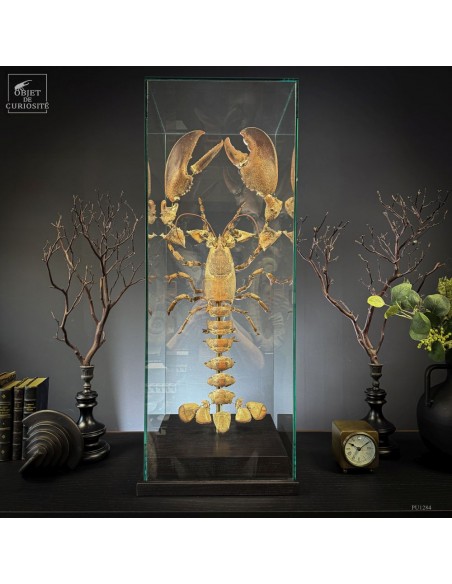
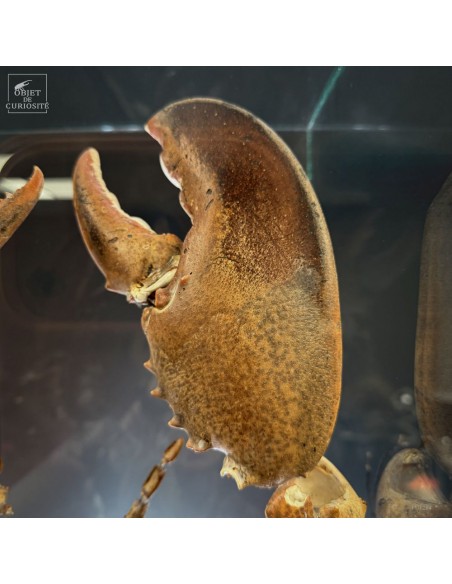
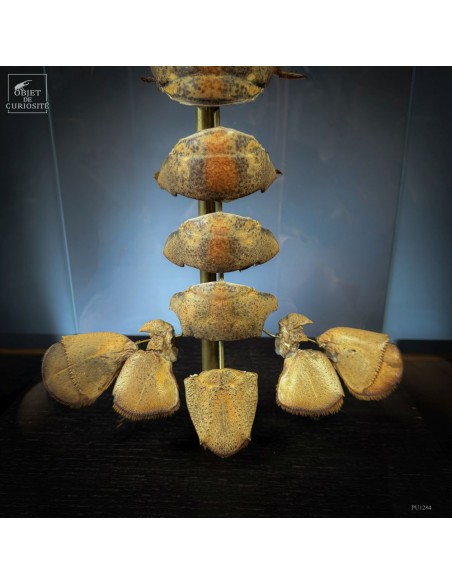
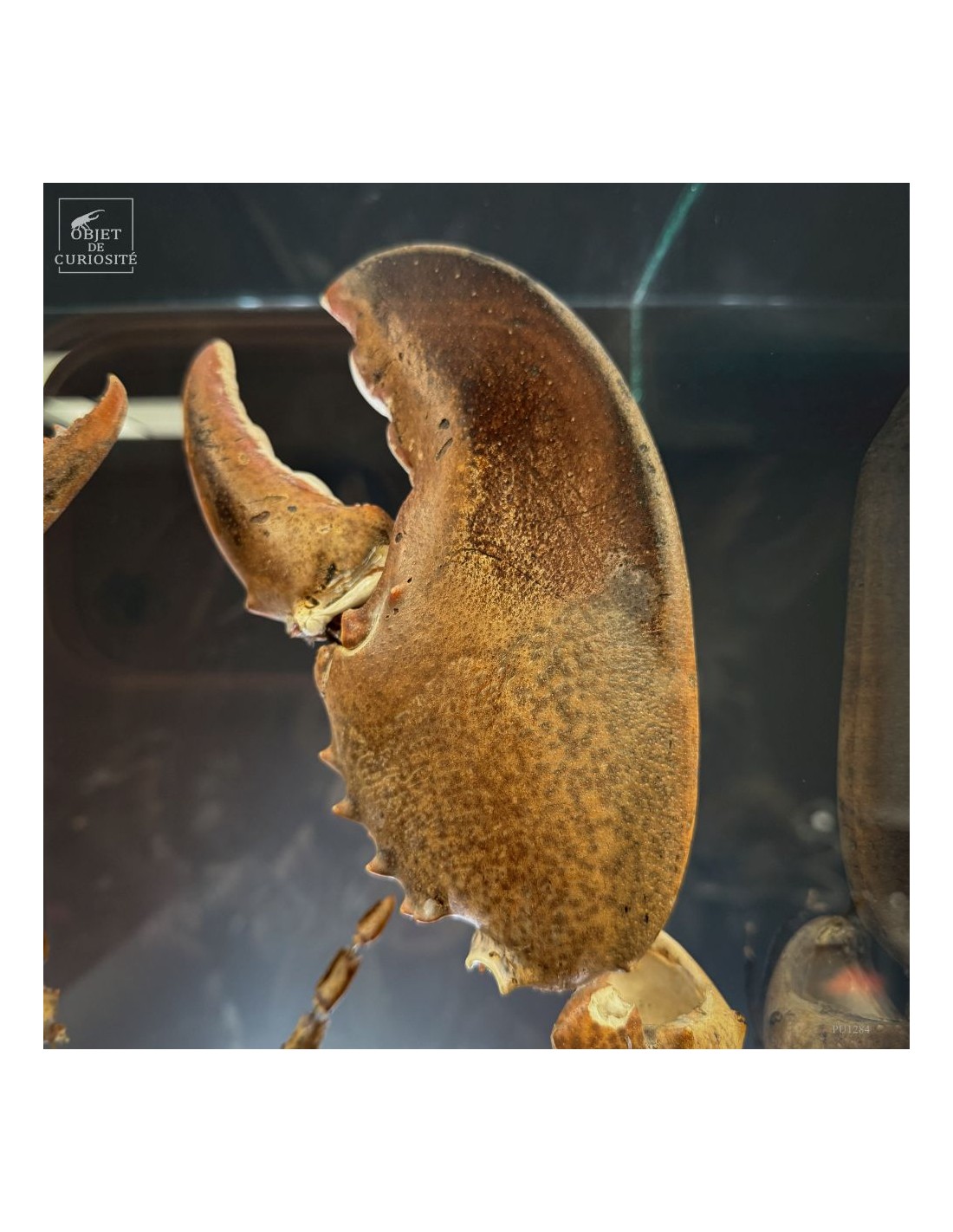
The result is striking: the lobster appears larger than life, as if unfolded in space, somewhere between scientific display and sculptural object. Its segmented tail, asymmetrical claws and articulated limbs can all be studied with unusual clarity.
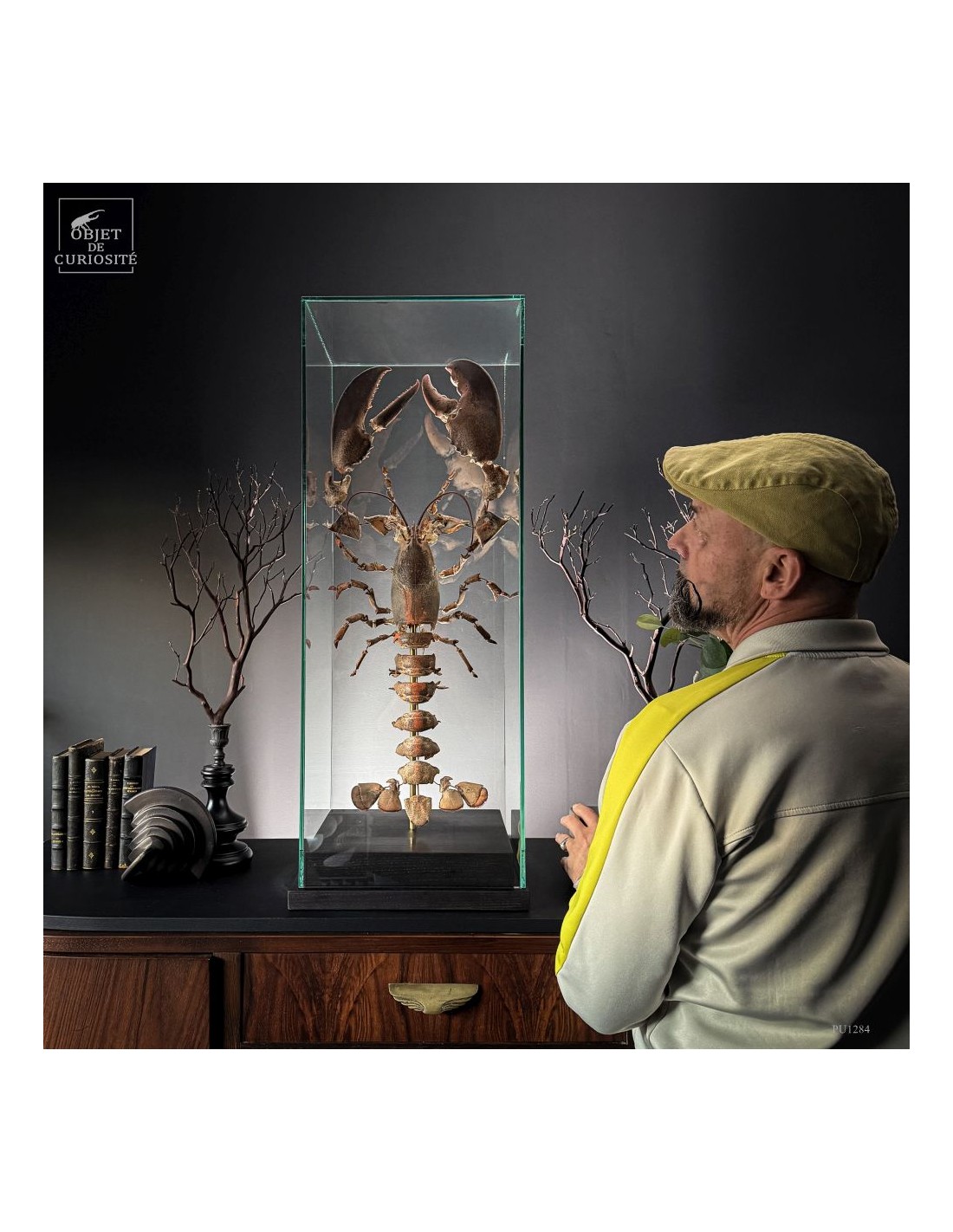
A spectacular presentation inspired by historical natural history museum displays — and reimagined here as a true anatomical curiosity. A centrepiece of 87cm high that will raise the curiosity of everyone.
The result is striking: the lobster appears larger than life, as if unfolded in space, somewhere between scientific display and sculptural object. Its segmented tail, asymmetrical claws and articulated limbs can all be studied with unusual clarity.
A spectacular presentation inspired by historical natural history museum displays — and reimagined here as a true anatomical curiosity. A centrepiece of 87cm high that will raise the curiosity of everyone.