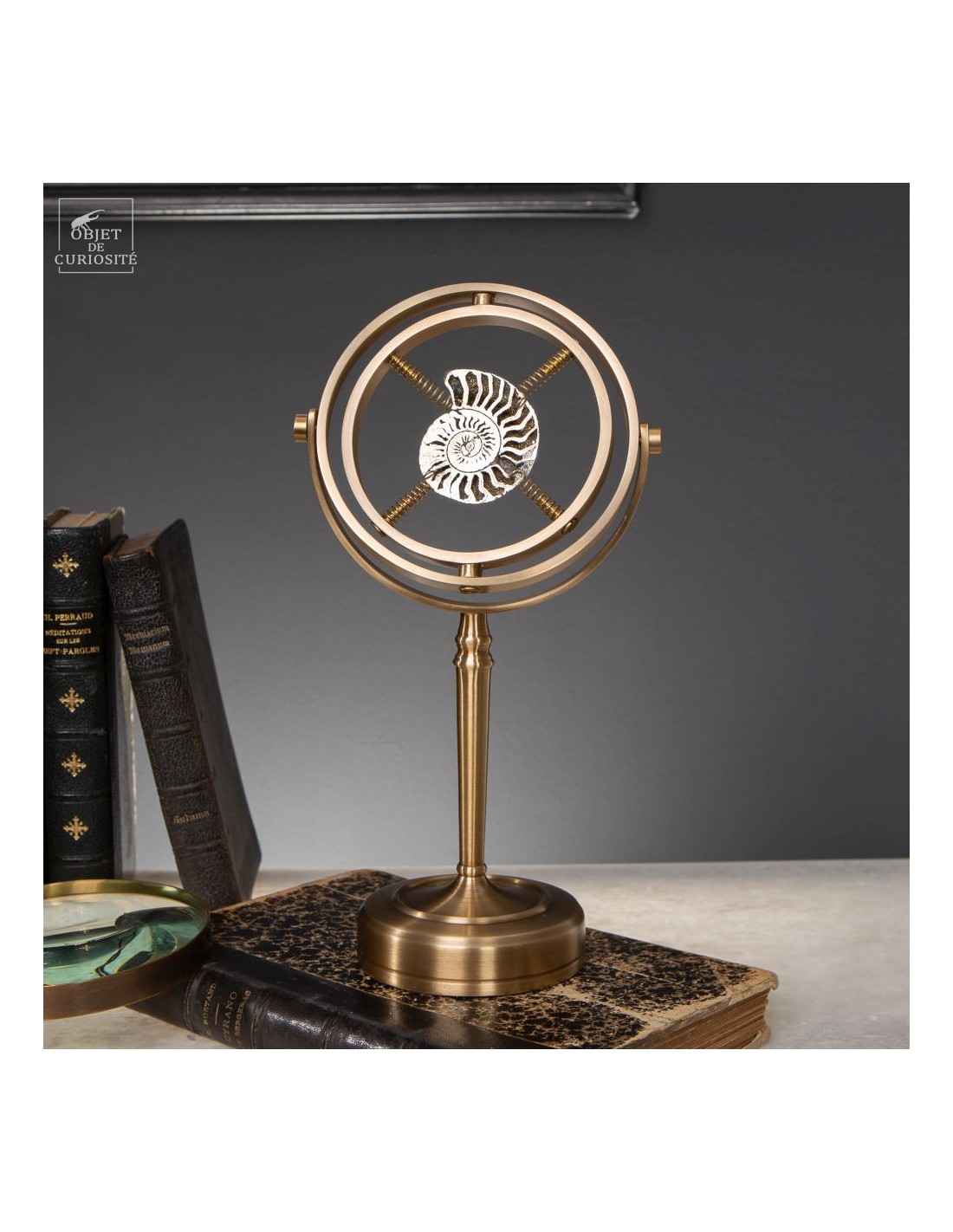


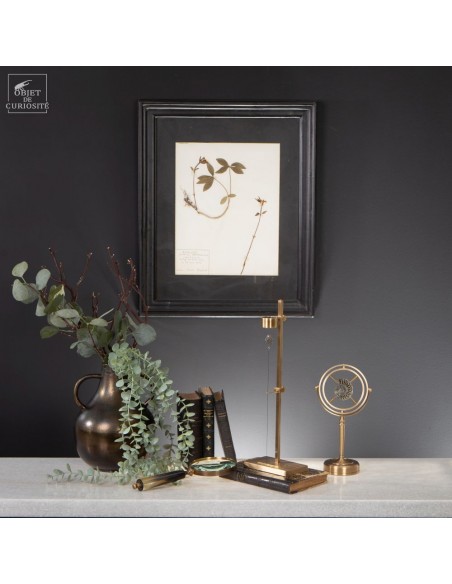


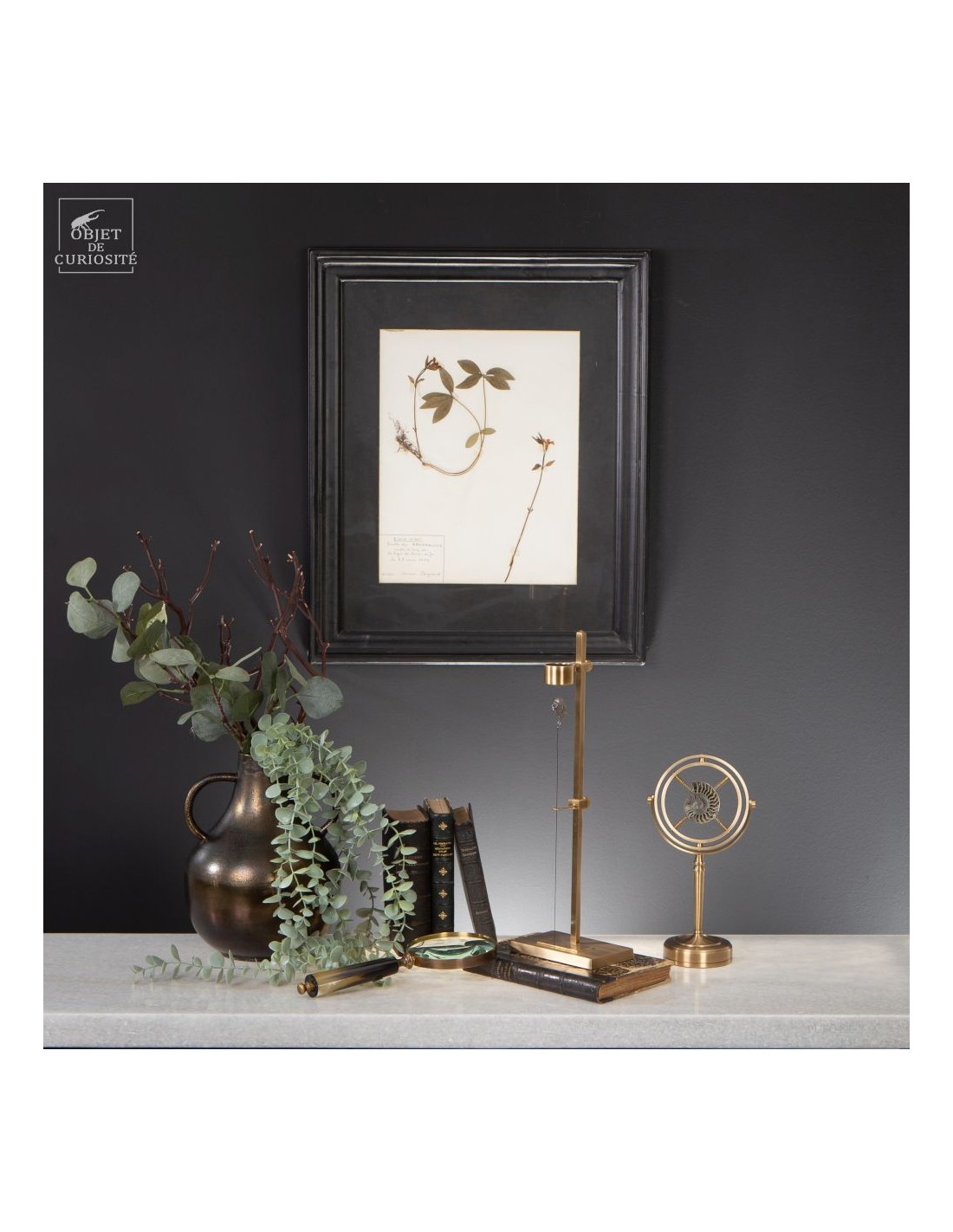


Ammonite with pyritel, spinning brass stand
PUFO496-2
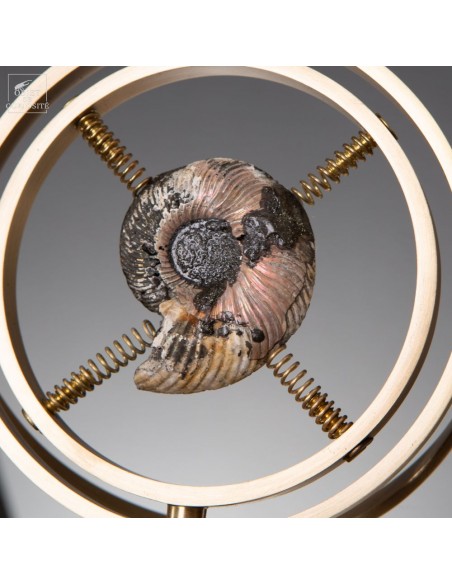
This ammonite hasn’t been gilded or artificially aged. It simply had the good fortune to fossilize in pyrite-rich sediments — iron sulfide — which gave it this natural metallic hue.
It comes from the banks of the Volga River near Saratov in Russia, a site renowned for Jurassic fossils with remarkably well-preserved details. Species such as this Quenstedtoceras are found there, with intact spirals, and internal chambers entirely covered with pyrite. And even the prehistoric mother of pearl layer on the outside.
The piece is mounted on a rotating brass stand, designed by Objet de Curiosité.
Half geological jewel, half relic of a vanished sea, this ammonite is proof that elegance can arise from chance — and from a few million years of patience.
It comes from the banks of the Volga River near Saratov in Russia, a site renowned for Jurassic fossils with remarkably well-preserved details. Species such as this Quenstedtoceras are found there, with intact spirals, and internal chambers entirely covered with pyrite. And even the prehistoric mother of pearl layer on the outside.
The piece is mounted on a rotating brass stand, designed by Objet de Curiosité.
Half geological jewel, half relic of a vanished sea, this ammonite is proof that elegance can arise from chance — and from a few million years of patience.
This unique piece has been sold...